
Japan
Daibutsu head, Japan
2016
A closer look at the work
A large Buddha’s head appears in a close side view against blue sky. Regular curls, an elongated ear and a lowered eye line divide the dark surface. Light reaches only certain edges. A cropped shoulder reduces the entire statue to a relationship between face, ear and head shape.
Daibutsu Head makes the distance between sculptural body and photographic image tangible. Cropping brings the monument close while its dark material remains closed. Looking moves across repeated forms before pausing at the facial contour. The photograph presents shaped presence without deriving a single religious or psychological message from the visible expression.
Format and edition details
| Größe: | 35,8 × 25 cm, Auflage 15 + 2 AP |
| 73 × 51 cm, Auflage 6 + 2 AP | |
| 146 × 102 cm, Auflage 3 + 2 AP | |
| Jahr: | 2016 |
Details from the artwork archive. Please confirm the current presentation and availability personally.
Personal consultation
The work, the space, the presentation.
What interests you about this work? I take time for your questions, its origins and its place in a collection. Together, we explore differences between works and their relationship with space, light and architecture.
Size, selected materials and bespoke framing are carefully coordinated. The precise presentation develops through our conversation.
A photograph of the intended space can help us consider scale and placement.
The work in a space
Scale and spatial presence
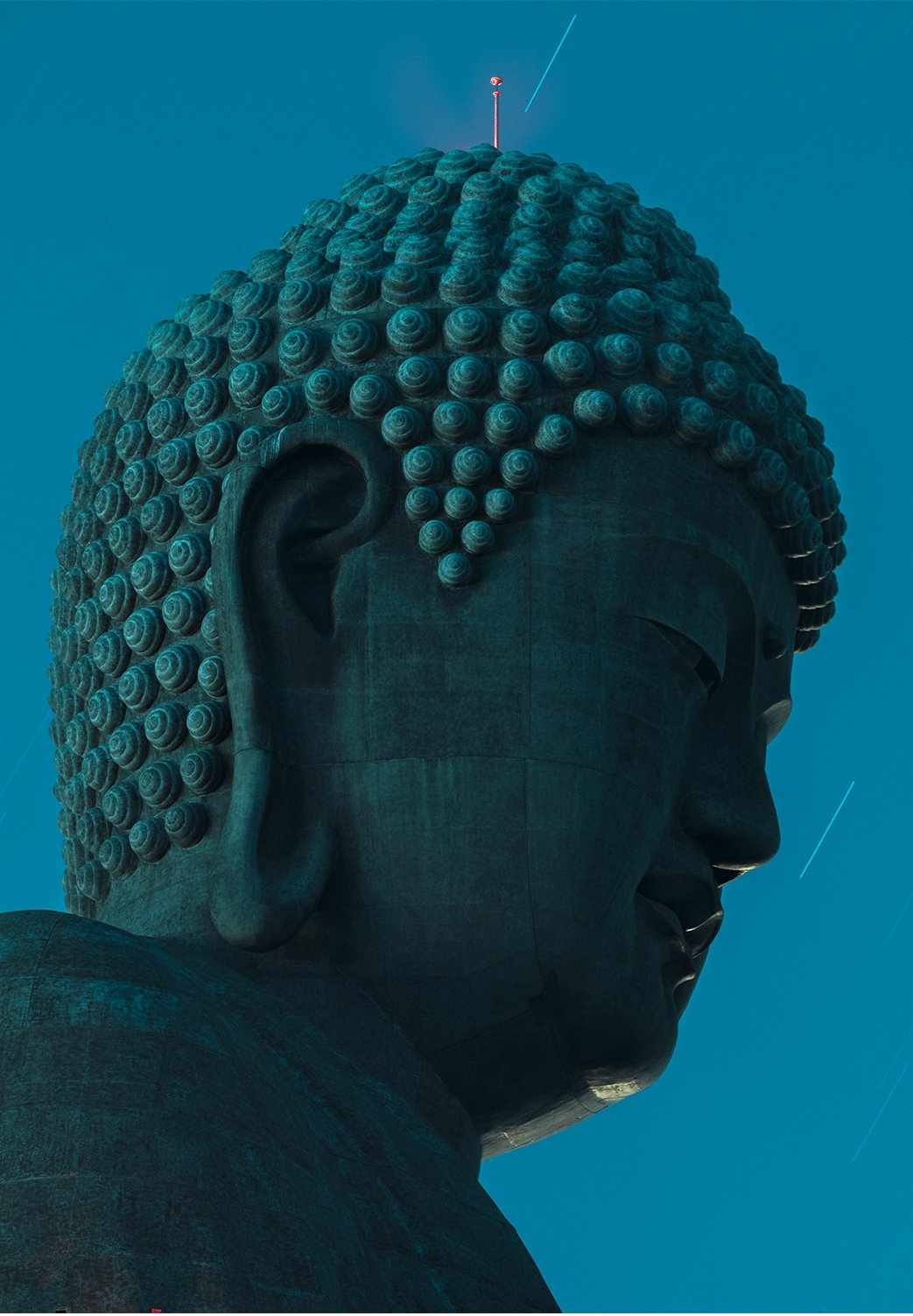
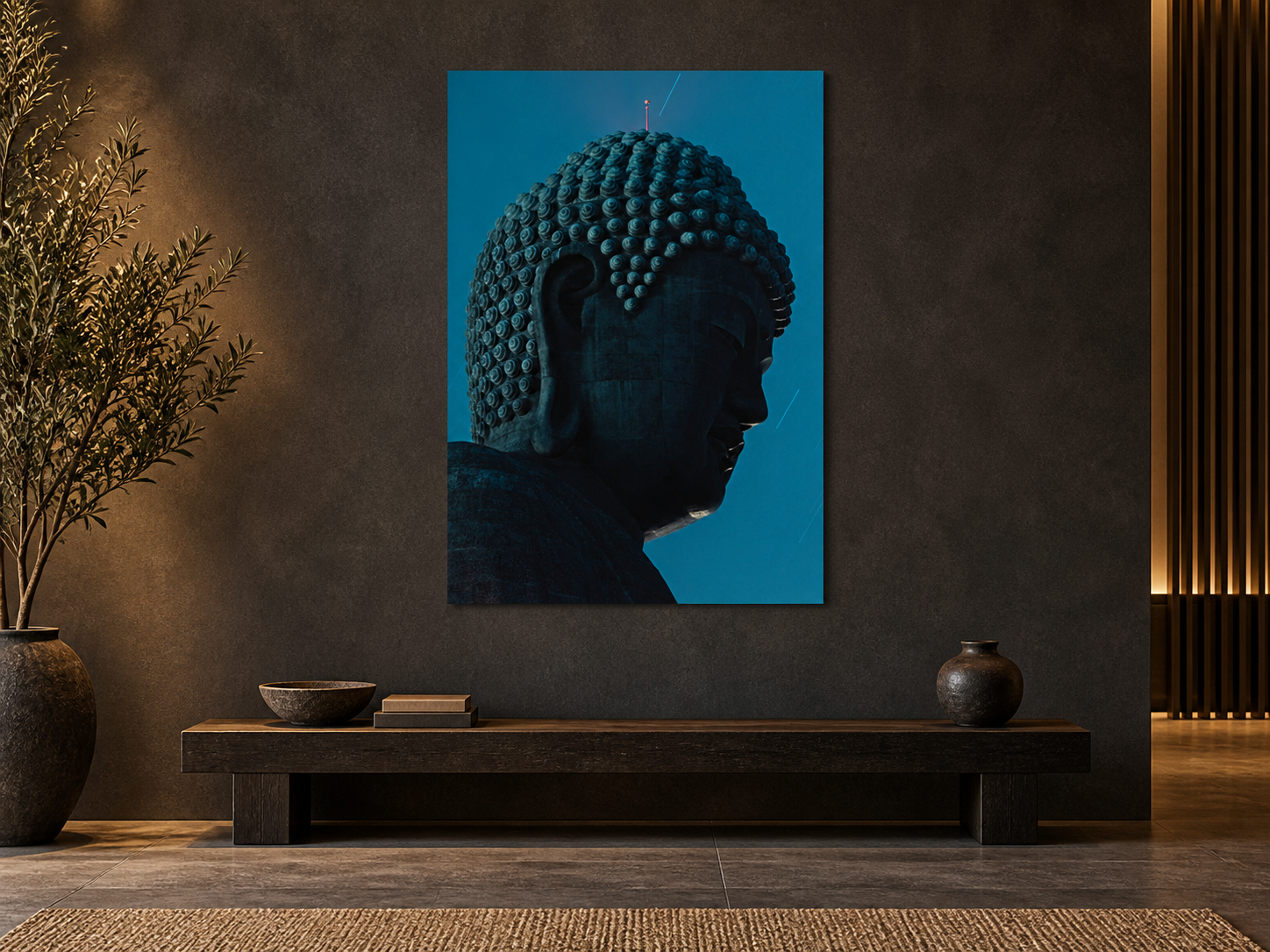
Visualization · Spatial design proposal. The original photograph is inserted unchanged. All sizes share the same room, viewpoint and scale. Presentation and framing are discussed individually.
Work and editions
Further information from the artwork archive
Archive title: Daibutsu head, Japan
Format and edition details
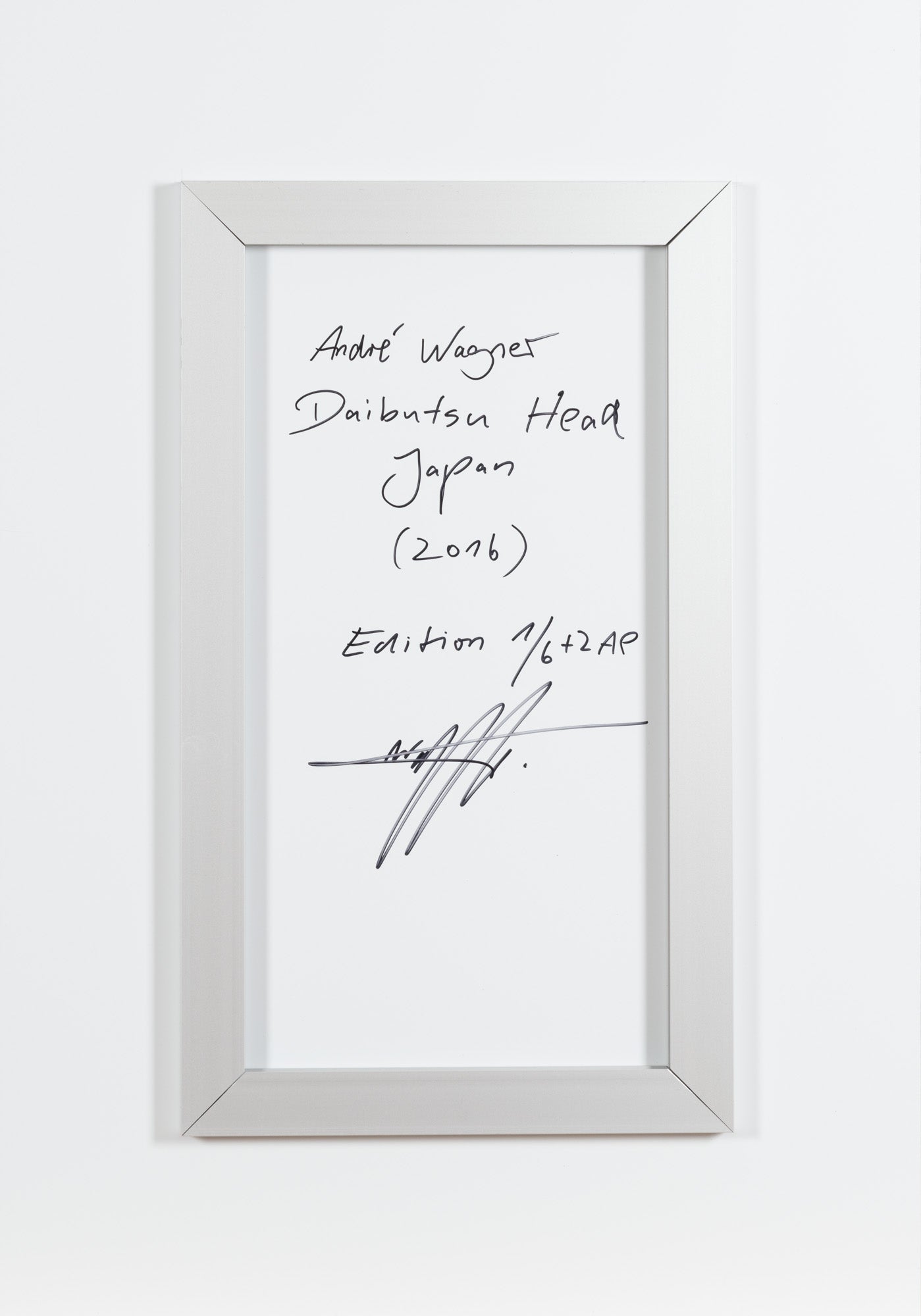
| Größe: | 73 × 51 cm, Auflage 1/6 + 2 AP |
| Year: | 2016 |
Details from the artwork archive. Please confirm the current presentation and availability personally.
Further views
Discuss the work
A personal conversation offers time to consider the work, its context and its place in a collection.