
Artificial Performance and a Self-Carriage
Works, Exhibitions & Projects Written by André Wagner
The 21st-Century PhotographerA text about my work by the curator and photographer Mindaugas Kavaliauskas
In André Wagner’s series “Romance of Elements”, simplicity meets complexity in the context of contemporary photography. At first glance, the works show tranquil natural landscapes.
However, considering the particular interplay of landscape with the fire element, we can observe a translucent action similar to a temporary land art action made visible through the medium of photography.
The effect of drawing non-existent forms, outlines and figures by means of long-term exposure was developed in the 1930s by one of the fathers of photographic constructivism, the Bauhaus director at the time. László Moholy-Nagy, described above.
Historical context: László Moholy-Nagy was a master at the Bauhaus from 1923 to 1928. In 1937, he became director of the New Bauhaus in Chicago. Source : Bauhaus Kooperation
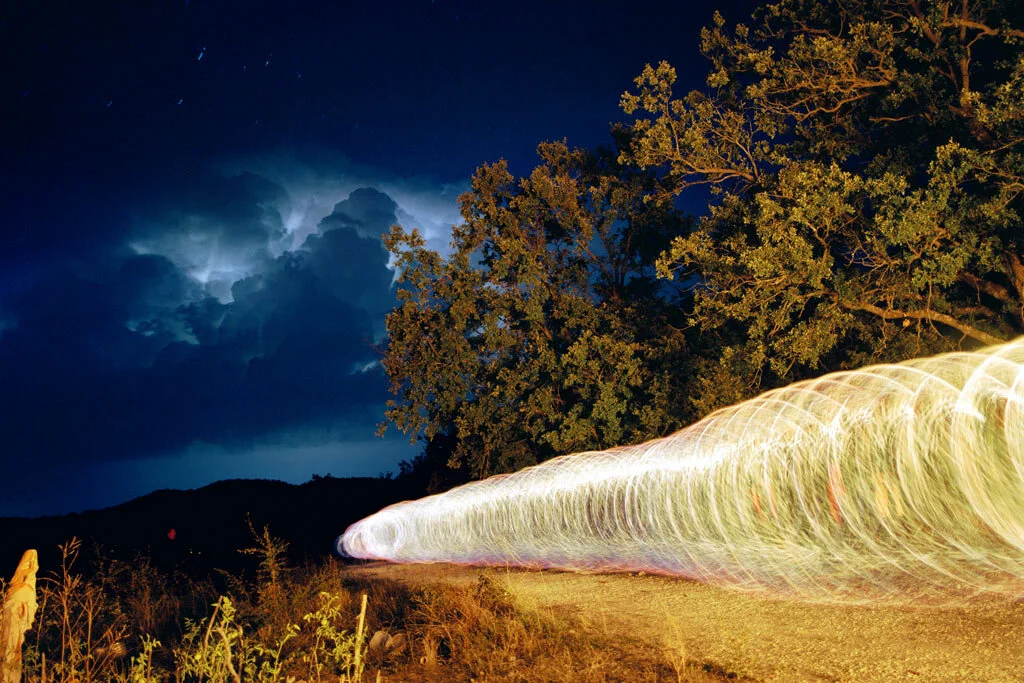
André Wagner explicitly rejects the technical possibilities of post-processing and decides to create analog photographs. His photographs are usually taken at night, when he performs himself and draws with fire in the dark.
André Wagner describes his "Romance of Elements" as a study of the metaphysical energy of fire. It creates quasi-self-portraits that document his movements in space. So overall, we have photographs of landscapes, land art, artistic performance and a self-portrait.
This ambivalence of Romance of Elements involves conflicts between mysticism and the obvious, between simplicity and deep meaning, between spirituality and possibly kitsch.
Most, if not all, of the images from Romance of Elements invite us to meditate on the views and symbols of still unexplored, distant and exotic worlds. A fire spiral leading up the steps to a sacred site on a mountain in India points to the search for Oriental wisdom and spiritual perfection.
Long traces of the stars in the sky indicate the passing of time, with all aspects of time travel and the great amount of human patience while achieving a goal. In another image, a rocky forest landscape in New Zealand awakens in the light just as if looking back at the distant Maori culture.
Somehow, this landscape resembles a photograph from Lithuania, where the top of a felled tree is dipped in light, resurrecting the memory of one of Europe’s longest surviving pagan cultures, with sacred forests and fire in its protective sanctity.
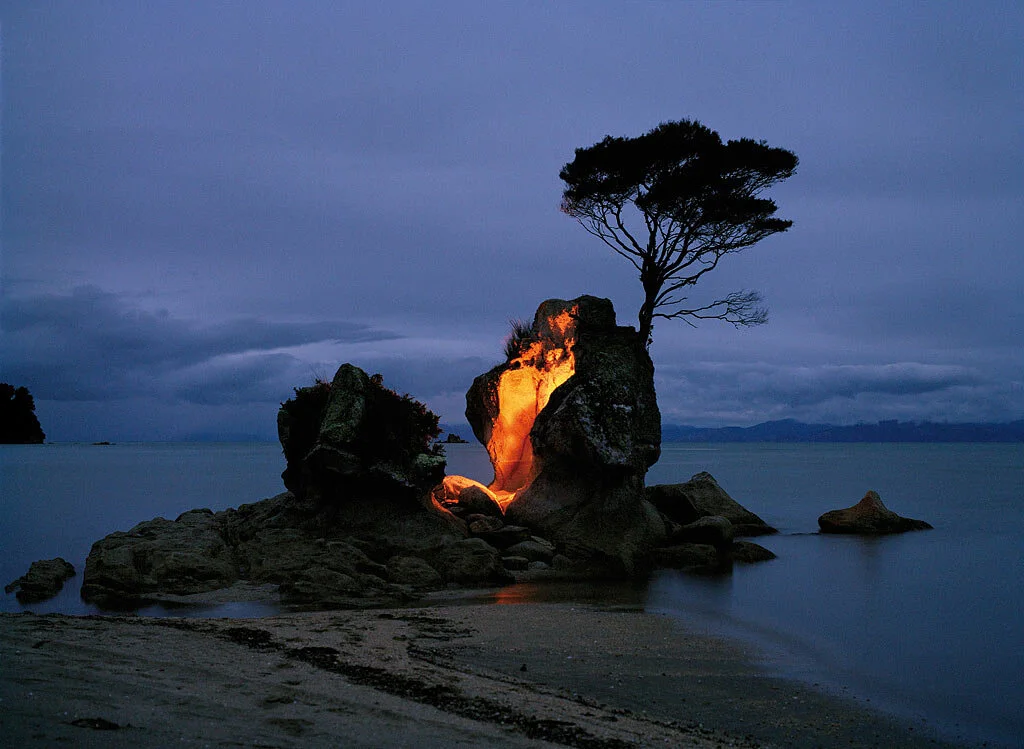
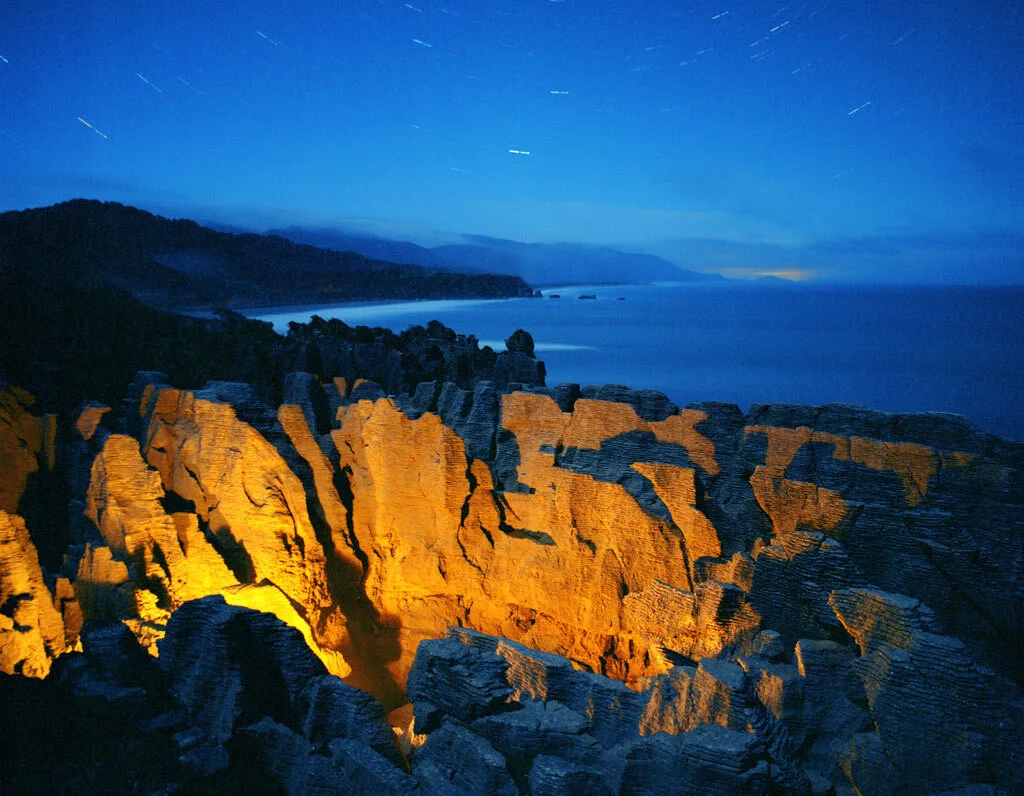
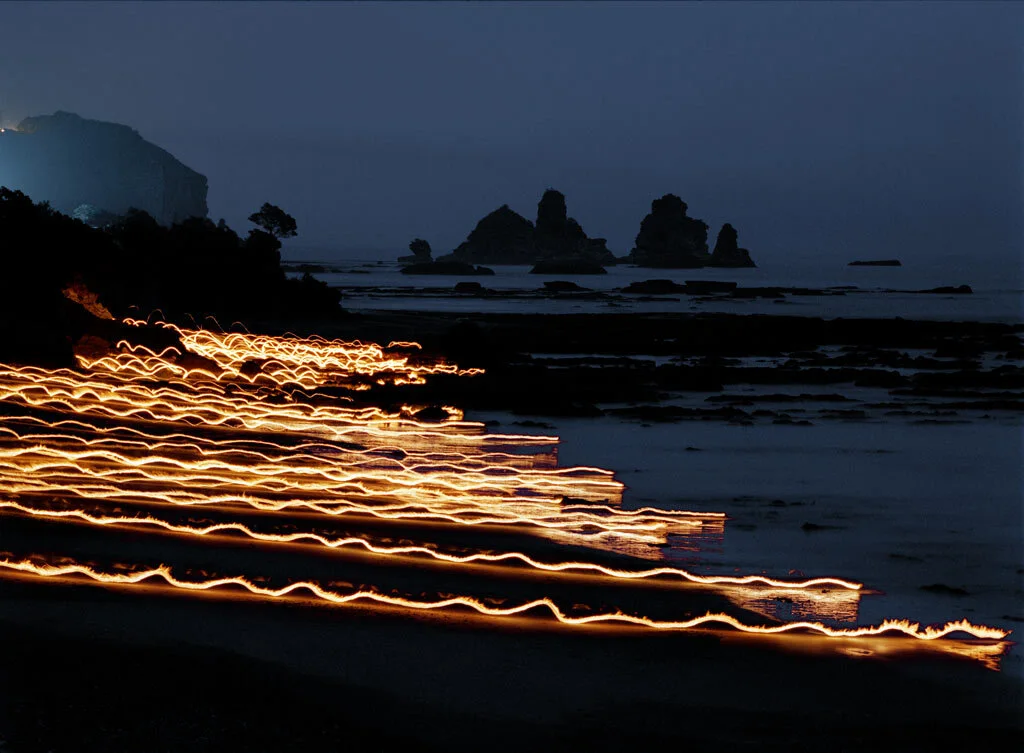
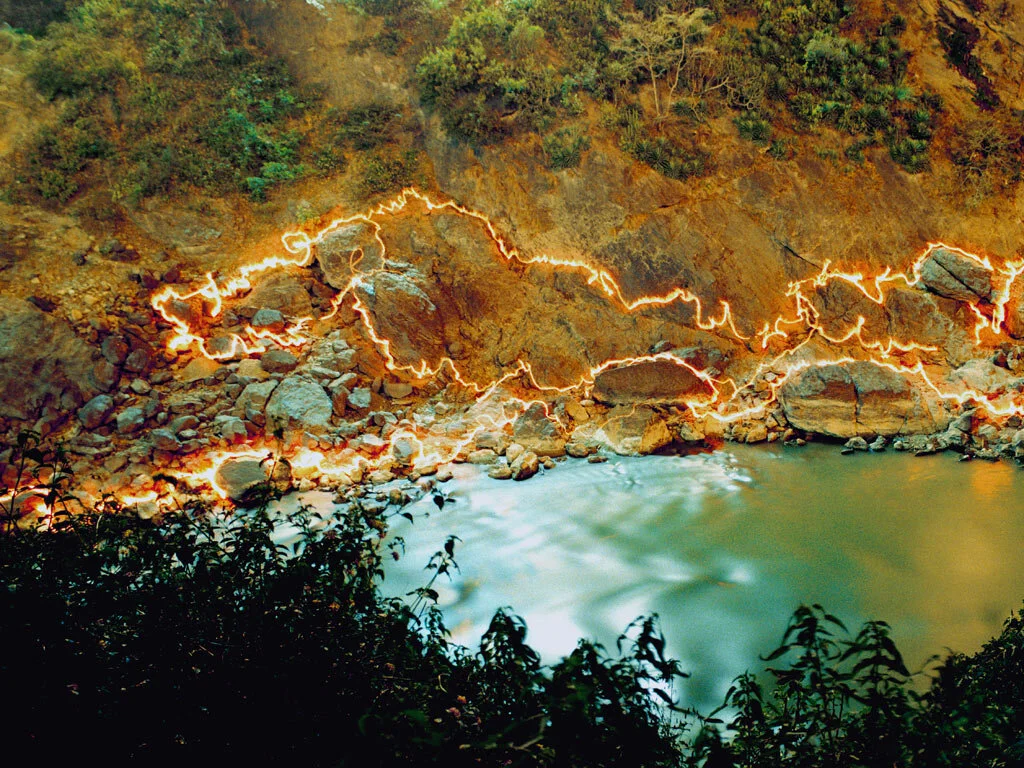
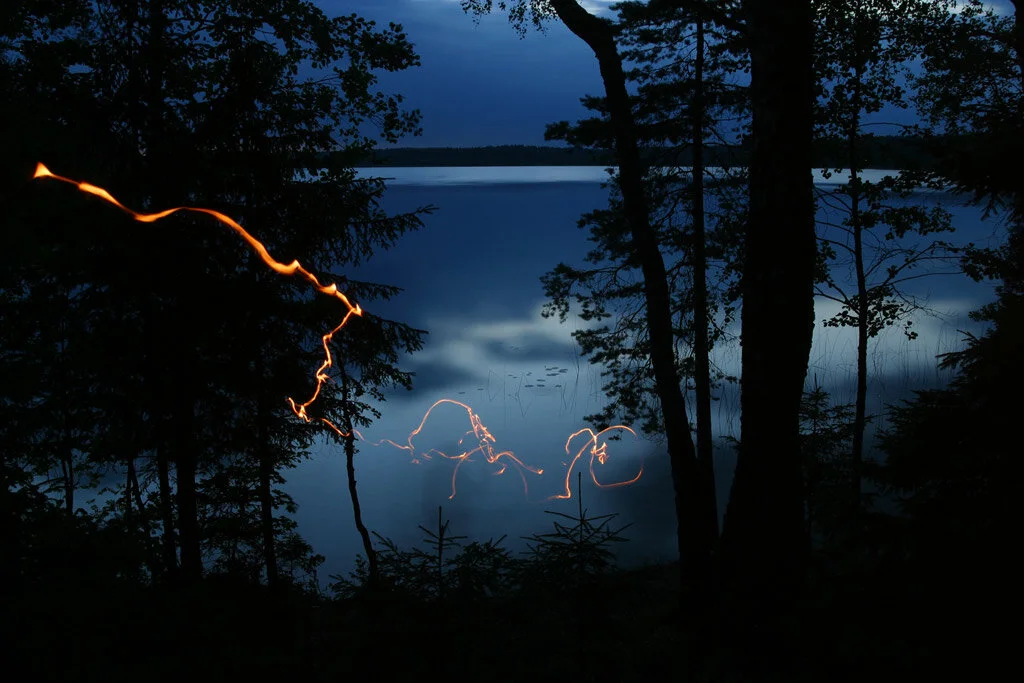
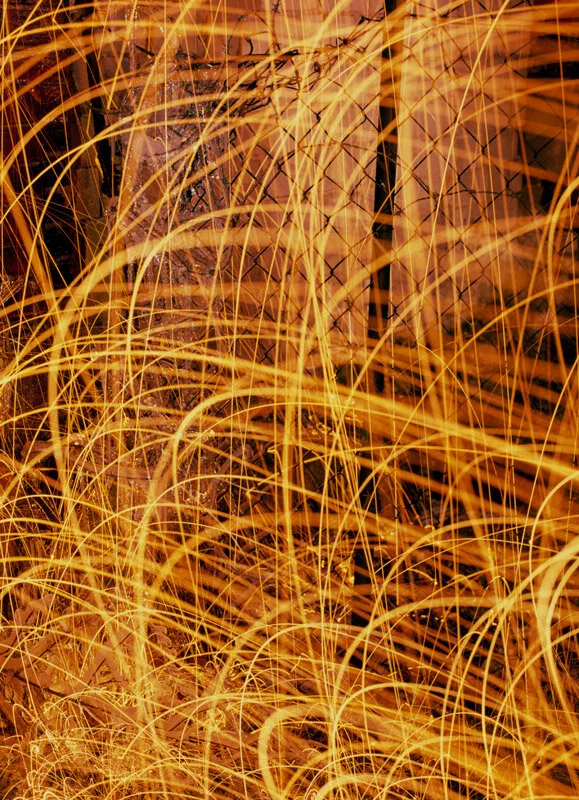
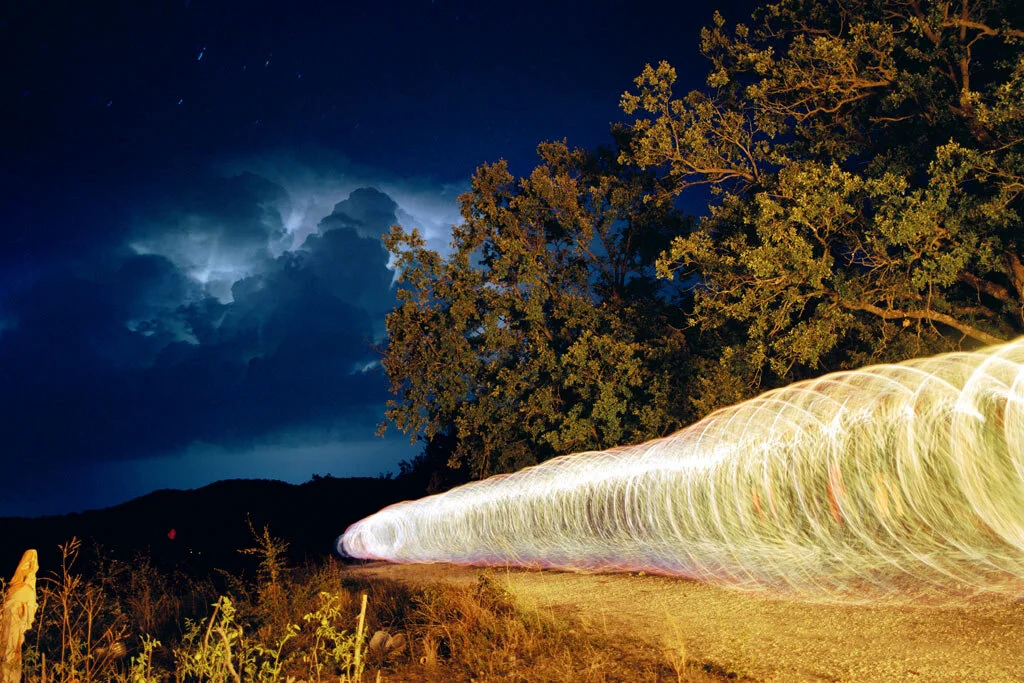
Such interpretations of "Romance of Elements" will seem reasonable to those who seek higher planes, and they see ambiguity in modern landscapes, and there is no denying a kitsch approach, although it is accompanied by a gentle irony.
When I look at the picture of the construction site of a German highway, I feel helpless in my attempt at interpretation to go with a traditional approach to the search for spirituality.
But I admit to myself that the car is nowadays the cult object number one and must be regarded as the god of movement, as a “Zeitgeist” that has intrinsic to Germany for more than a hundred years.
Among those interested in photography, there are people who only appeal to André Wagner’s works until they know in what form the fire was used.
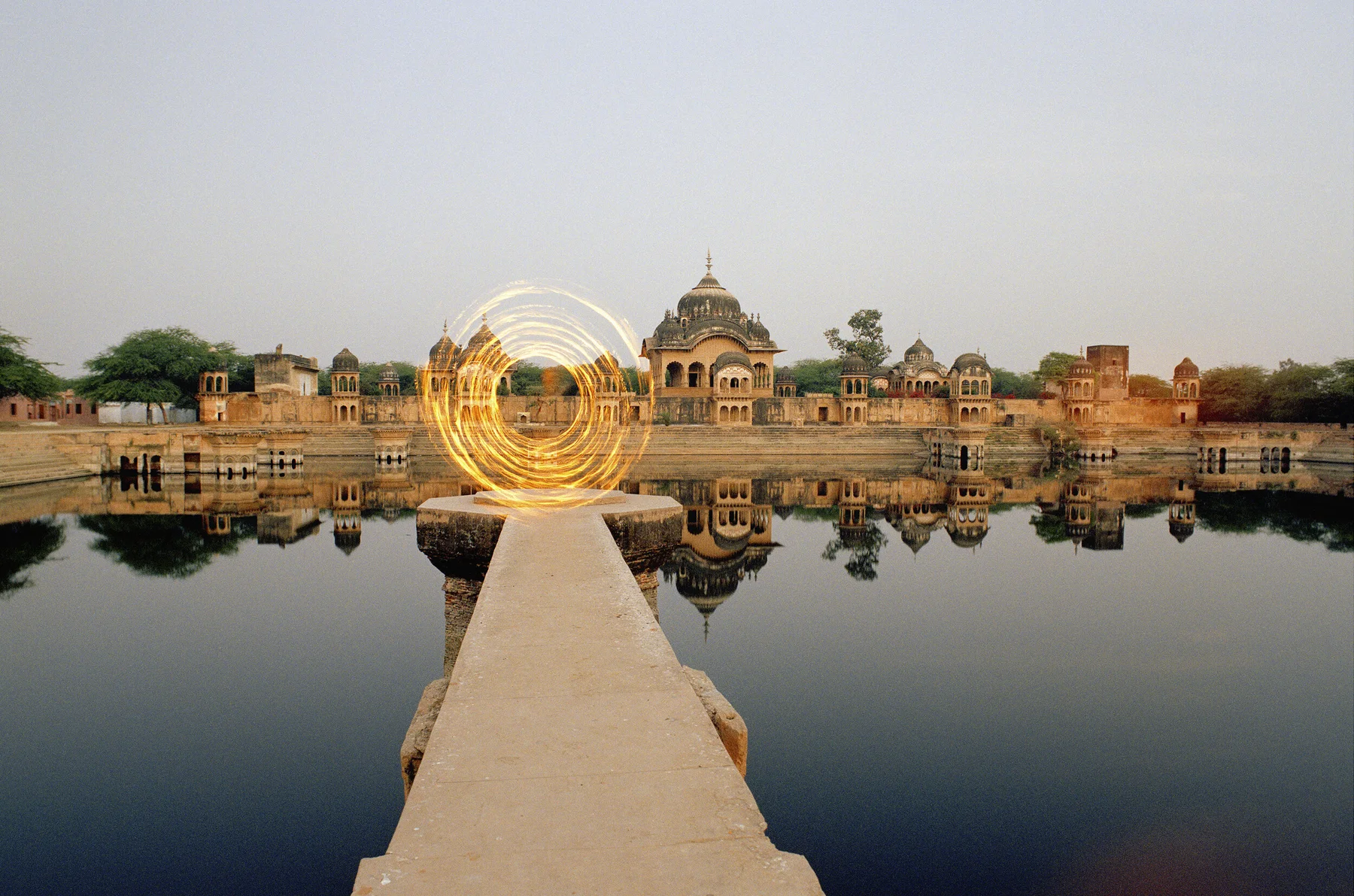
After finding out, they tend to think that now that the method has been revealed, it's easy to make such recordings yourself, and they'd probably consider improving the technique by using digital media instead of medium format film, and digital drawings instead of real fire performances.
André Wagner sees photography as something without the “undoing” function. For him, it is more important to be authentic than one of many. He chooses the more difficult and unguaranteed paths to the realization of his works of art. Slowly, far from home, often insecure, he roams the nights with a torch as he tries to make the power of light visible, accepting possible imperfections and living the elements of the chosen place.
For me, one of the outstanding images in the “Romance of Elements” series is the recording of the dried-up river in New Zealand.
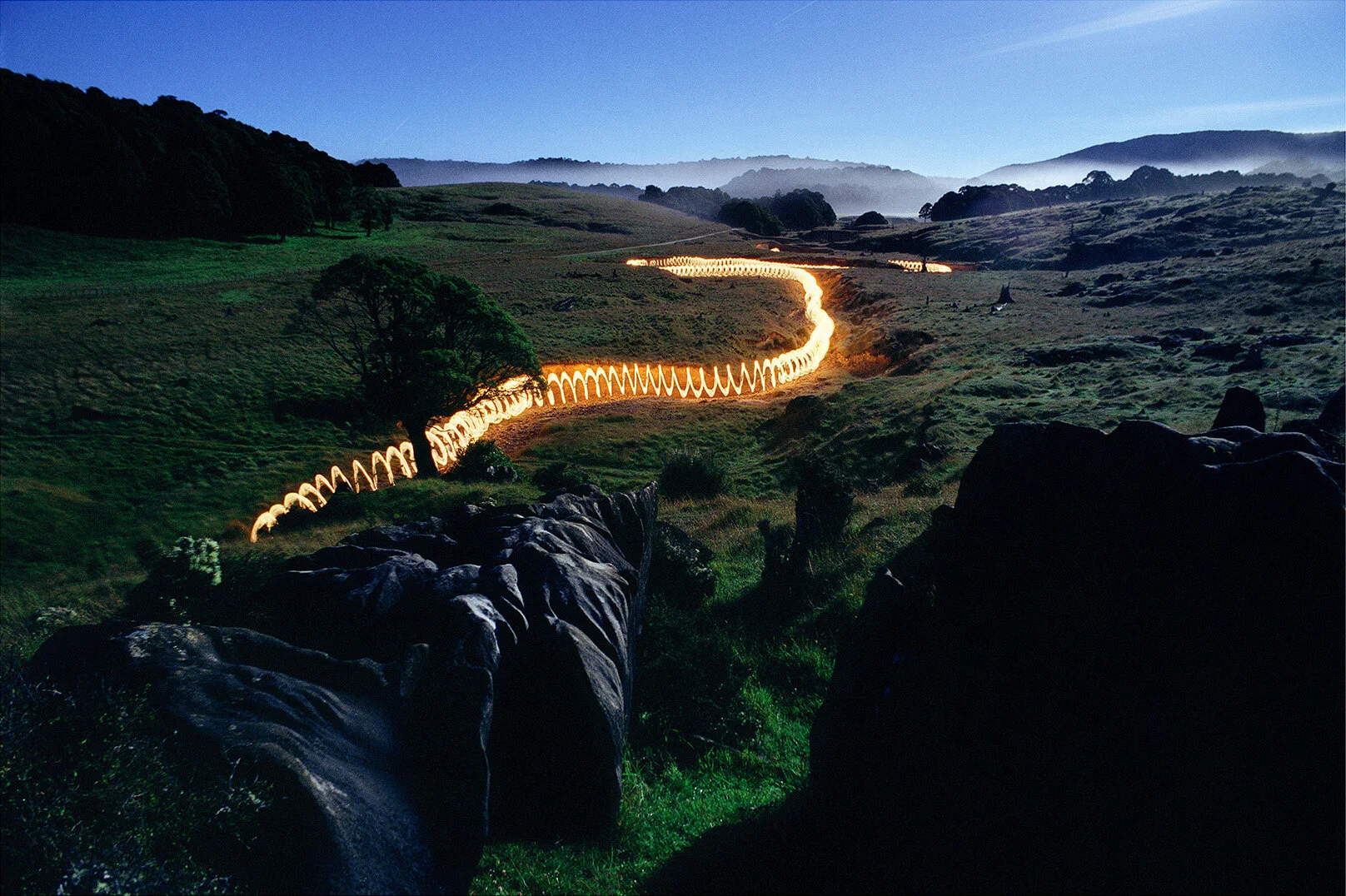
The photographer filled the bed of the missing river with a spiral jet extending for kilometers and replaced one element with another.
It took him a lot of effort and discipline to keep dancing down the riverbed with the giant torch to perform a fire performance for the land, the air, the space and the missing water. It took almost an entire night to run the miles for this shot until the next morning was horrible and the last drop of lamp oil was consumed.
In German, unlike many other languages, there is a loan translation for the word known in English as photograph (phos - light; graphos - drawing, writing).
Strangely enough, it's quite unusual today to call a photographer a light designer, and it sounds old-fashioned at first.
But even more important to me is the fact that there are not many photographers who see fire as the original source of creation and light, as it once was, and thus as an essential tool for creating a photograph, one that refers to “drawing with light”.
And it is precisely on this point that André Wagner is different: among millions of professional and amateur photographers and routine image shooters in Germany, he remains the only “lighting artist of the 21st century”.
If you are interested in my works of art, then download this catalogue for free.
There you will learn more about the prices, backgrounds, details and my motivation as an artist.